Vintage Firefighter Tools Set Review
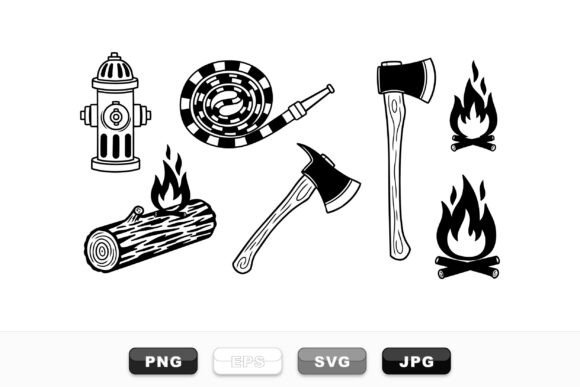
As a designer who spends half my life staring at stitch charts and the other half trying to convince clients that "rustic" doesn't mean "messy," I approach every new embroidery file with a healthy dose of skepticism. We are constantly flooded with generic clip art disguised as digital assets, so finding something with genuine character is rare. That is why I took a close look at the Vintage Firefighter Tools Set. This isn't just another vector pack; it is a curated collection of firefighting hose, fire hydrant, axes, and campfire illustrations rendered in a classic hand-drawn style.
My goal here is not to sell you the product but to tell you whether it will actually work for your next embroidery project. Whether you are an Etsy seller looking for a niche holiday item or a hobbyist wanting to make a personalized gift for a local hero, this review breaks down the visual personality, practical application, and potential pitfalls of using these graphics in real-world stitching scenarios.
The Mood and Visual Personality
When I first opened the downloadable ZIP, the immediate takeaway was the monochrome aesthetic. In the world of machine embroidery, color is king, but line weight and shape definition are its backbone. This set excels in both. The retro monochrome vector set conveys a rustic and functional theme that feels authentic rather than cartoonish. The lines have that slight irregularity you get from actual pen-and-ink drawings, which translates beautifully into thread.
This design does not scream for attention with bright neon colors; instead, it whispers authority and tradition. It creates a mood of reliability and heritage. For a handmade product, this is crucial. Customers today are tired of overly polished, corporate-looking merchandise. They want items that feel like they were made by human hands with a story behind them. The inclusion of specific tools like axes and hoses gives the design a narrative quality—it tells the viewer about bravery, community service, and outdoor adventure without saying a word.
Real-World Application: Where It Shines
I tested the concept of this design across several common use cases to see where it fits best. The versatility of the Vintage Firefighter Tools Set makes it a strong candidate for various categories of custom apparel and home goods.
- Custom Apparel and Sweatshirts: Imagine a heavyweight charcoal grey sweatshirt embroidered with a single, crisp white outline of a vintage fire hydrant on the left chest. Or perhaps a larger back print featuring the full set arranged in a badge-like layout. The clean lines of the vector graphics hold up well against the textured fabric of fleece or cotton blends. It adds a layer of sophistication to what could otherwise be a cliché firefighter shirt.
- Tote Bags and Aprons: For the Etsy seller targeting the kitchen or camping niche, this design is gold. A canvas tote bag stamped with a subtle, tonal embroidery of a campfire and axe set looks incredibly chic. Similarly, a chef’s apron featuring a stylized fire hydrant can serve as a clever conversation starter in a professional kitchen or a unique gift for someone who loves cooking.
- Baby Embroidery and Nursery Decor: Do not overlook the softer side of this theme. A onesie or burp cloth with a tiny, simplified campfire illustration can be adorable. It moves away from the danger aspect of fire and leans into the warmth and light. This is perfect for personalized gifts for parents who appreciate outdoor themes.
- Embroidered Patches: The distinct shapes of the axes and hoses lend themselves perfectly to patch designs. These can be used on denim jackets, backpacks, or caps. The high contrast required for legibility in patches aligns naturally with the bold lines of this graphic set.
Technical Considerations and Stitching Challenges
While the artistic merit is undeniable, a good machine embroidery design must also be technically sound. Here is where you need to pay attention before hitting the start button on your hoop.
Stitch Density and Detail: The hand-drawn style relies heavily on fine lines. If you are converting these vectors into a digitized format, you must ensure the stitch density is appropriate. Too dense, and the fabric will pucker; too sparse, and the intricate details of the hose texture or axe head will disappear. I recommend reviewing the small details closely. If the original file contains extremely thin hairlines, you may need to adjust the scaling or add a slight stroke width during digitization to ensure clarity.
Fabric Texture Compatibility: This design works best on stable, medium-weight fabrics. Avoid using it on highly textured materials like bouclé or very thin, sheer fabrics unless you are using a heavy-duty stabilizer. On stretchy fabrics, such as athletic wear, the tension needs to be carefully managed to prevent distortion of the circular elements, like the wheels of the hydrant or the rings of the campfire.
Thread Color Contrast: Because the source is a monochrome vector, the success of the final piece depends entirely on your thread colors. Black thread on black fabric will result in nothing visible. White thread on white fabric is equally invisible. You need contrast. Navy blue thread on a cream background, or rust-colored thread on a denim jacket, can bring out the warmth of the campfire theme. Always test your thread colors on scrap fabric first to check for contrast issues.
Where to Use Carefully
There are certain applications where this design might struggle. Avoid placing detailed versions of this set on curved surfaces like baseball caps unless the design has been specifically digitized for curvature. Flat vector graphics often distort awkwardly when forced onto a curved brim or crown. Additionally, be cautious with small hoop sizes. If you try to squeeze the entire set into a 4x4 hoop, the individual icons (the axe, the hose, the hydrant) may become too small to read clearly. In such cases, simplify the design or focus on a single element.
Impact on Product Value and Brand Consistency
Using a cohesive graphic set like this elevates your craft business presentation. When your design assets share a consistent style—such as the classic hand-drawn aesthetic of this firefighter set—your brand looks more professional and trustworthy. Buyers can instantly recognize your shop’s signature style.
Furthermore, this design taps into the growing trend of "heritage" and "artisanal" products. By choosing a design that feels timeless rather than trendy, you increase the longevity of your inventory. A sweatshirt embroidery featuring this set is just as relevant in five years as it is today. This reduces the pressure to constantly chase micro-trends and allows you to build a catalog of evergreen products.
Final Designer Notes
Before you rush to list this on your shop, keep these practical steps in mind:
- Test on Scrap Fabric: Never assume a design will stitch out perfectly. Run a test on the exact fabric you plan to use.
- Check Licensing: Confirm whether the license allows for commercial use if you intend to sell finished products. This is critical for any commercial embroidery project.
- Use Proper Stabilizer: The right stabilizer can make the difference between a puckered mess and a smooth finish. Match your stabilizer to the weight and stretch of your fabric.
- Mockup Before You Make: Create a printable mockup or digital preview to see how the design interacts with different garment colors and styles. This helps manage customer expectations.
The Vintage Firefighter Tools Set is more than just a collection of images; it is a versatile tool for creating meaningful, high-quality finished products. It balances nostalgia with functionality, making it a smart choice for designers who want to add depth and character to their work. If you are ready to create something that stands out in a crowded market, this set provides the visual foundation you need.