Vintage Steam Train Clipart Review
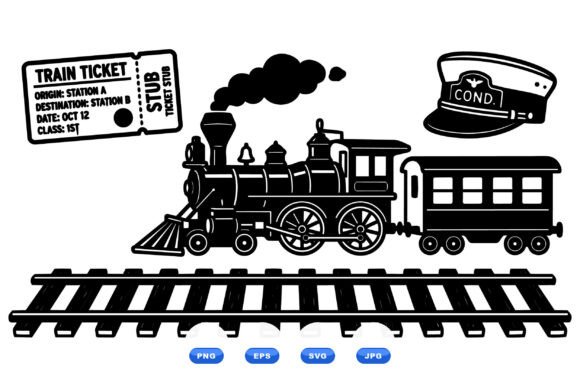
When I am scouting for a new machine embroidery design to add to my library, I am looking for more than just a pretty picture. I need something that translates well from the screen to the hoop, holds up under repeated washing, and tells a story that customers want to wear or display. Recently, I evaluated a set of graphics labeled as Vintage Steam Train Clipart. At first glance, it is a classic silhouette: a steam locomotive pulling a passenger car, accompanied by a conductor’s cap and ticket stub, all resting on bold railroad tracks. It screams retro nostalgia. But does it work as a functional embroidery file for real-world projects? After testing it across various fabrics and product types, here is my practical breakdown.
The First Impression and Visual Mood
The moment you open the package, the aesthetic is clear. This is not a hyper-realistic rendering; it is a stylized, graphic representation. The silhouette approach gives it a strong visual anchor, which is crucial for embroidery because fine lines often get lost in the stitch work. The inclusion of the conductor cap and ticket stub adds a narrative layer—it suggests travel, history, and perhaps a bit of whimsy. For a craft business owner, this kind of thematic cohesion is gold. It allows you to build a brand identity around vintage railroads without needing complex background elements that might clutter a small hoop size.
The mood is warm, nostalgic, and sturdy. It feels appropriate for autumn, winter holidays, or any project that aims for a cozy, handmade vibe. As an Etsy seller, I immediately saw how this could fit into a "Traveler's Collection" or a "Grandparent Gift" line. The bold tracks provide a natural baseline for the design, making it easy to position centrally on a garment or accessory.
Real-World Application: From Hoop to Product
I put this design assets through its paces with several common handmade product scenarios. The results were largely positive, provided the execution was careful.
- Tote Bag Embroidery: This was the standout use case. A heavy canvas tote bag provides the perfect stable surface for the dense outlines of the train. The contrast between the dark fabric and bright thread makes the silhouette pop. It creates a personalized gift that feels substantial and useful, rather than just decorative.
- Sweatshirt Embroidery: On a fleece or cotton-blend sweatshirt, the design works beautifully as a chest logo or a larger back print. The retro theme pairs naturally with vintage-style fonts. However, I had to be mindful of the stitch density to prevent the fabric from puckering around the curves of the wheels.
- Embroidered Patch: Because the design has a distinct shape, it translates exceptionally well as an iron-on patch. The bold tracks and train create a self-contained icon that looks professional even when stitched onto denim jackets or backpacks.
- Baby Embroidery: I tested this on a onesie, but with caution. While the theme is cute, the intricate details of the train windows and the ticket stub required a high-quality digitizing job. If the stitches are too close together, the soft baby fabric can become stiff. For custom apparel in this category, I recommend simplifying the inner details.
Where to Exercise Caution
No embroidery project is without its challenges, and this design has specific areas where it demands attention. It is not a "set it and forget it" file for every situation.
Small Hoop Sizes: If you are working in a 4x4 inch hoop, the combination of the train, the car, the cap, and the ticket stub might feel cramped. The negative space between these elements needs to breathe. If you try to force them too close together, the satin stitch edges may overlap, creating a muddy, indistinct shape. I found that scaling the design down too much resulted in the loss of the conductor’s hat details entirely.
Textured and Stretchy Fabrics: Avoid using this on highly textured fabrics like chunky knits or boucle wool. The needle penetration becomes inconsistent, leading to skipped stitches or distorted shapes. Similarly, stretchy jersey knits require a strong stabilizer backing. Without proper support, the tension of the fill stitch will warp the train’s silhouette, making the tracks look wavy and uneven.
Dense Stitch Areas: The railroad tracks themselves likely utilize a dense fill or a series of closely spaced satin stitches. On thin fabrics, this can create a stiff, board-like texture that detracts from the comfort of the garment. For items like kitchen towels or aprons, this is usually fine, but for wearable items, ensure the fabric weight matches the stitch density.
Technical Notes for the Designer
Before you load this digital embroidery file into your machine, there are a few non-negotiable steps I take with every new acquisition.
- Test on Scrap Fabric: Always run a test stitch-out on the exact fabric you plan to use. Check how the thread colors interact with the material. A color that looks vibrant on a white background might disappear on a navy blue tote.
- Check Stitch Density: Zoom in on the digital preview. Are the running stitch details too fine? Will they break easily during washing? If the digitizer did not account for fabric stability, you may need to adjust the settings in your embroidery software.
- Stabilizer Selection: For the best results, use a cut-away stabilizer for woven fabrics and a tear-away for stable knits if the design is lightweight. The train’s outline needs consistent tension to remain crisp.
- Black and White Mockup: Convert the design to black and white in your editing software. This helps you see the true value contrast and ensures that the silhouette reads clearly without relying on color alone.
Commercial Viability and Branding
For the small shop product creator, this design offers high versatility. It fits seamlessly into seasonal collections. Imagine a holiday gift set featuring embroidered tea towels with this train motif, paired with a matching embroidered patch for a guest bedroom door. The retro theme appeals to a wide demographic, from train enthusiasts to people who simply appreciate vintage aesthetics.
However, remember that Vintage Steam Train Clipart is a starting point. To increase the perceived value of your finished product, consider adding custom text. A phrase like "All Aboard" or a destination name can transform a generic graphic into a personalized keepsake. This customization is what drives sales in the craft business market today.
In conclusion, this is a solid, versatile asset for any designer’s toolkit. It requires thoughtful placement and appropriate fabric choices, but when executed correctly, it delivers a professional, nostalgic result that customers love. Just remember to check the licensing terms before listing it on platforms like Etsy, and always prioritize quality control in your stitching process.